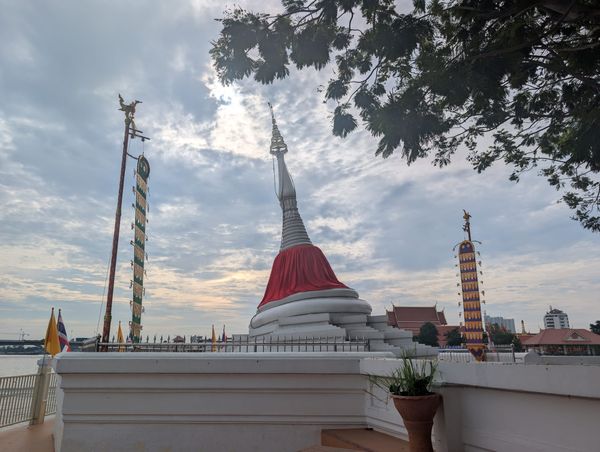
The Deck and the Duopoly
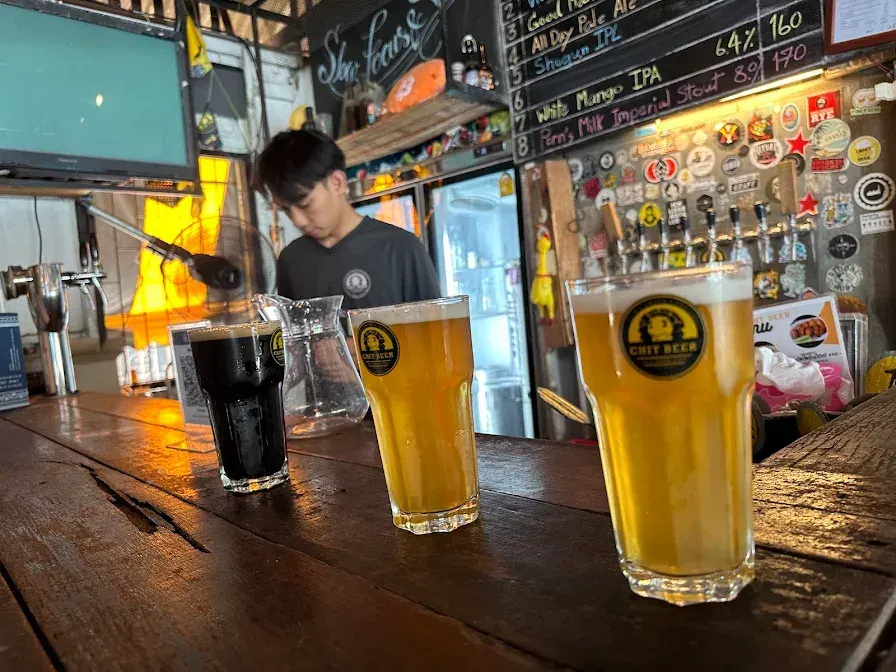
It was an unusually cold night for Bangkok, around eighteen degrees, and the men gathered on the wooden deck outside Wichit Saiklao's house on the river island of Ko Kret had not, until that evening, tasted any beer that any of them had brewed. There were ten of them. They were sitting outdoors in December, on the deck of a small wooden house overhanging the Chao Phraya, drinking the inaugural batch from a homebrew kit that Saiklao had been having shipped, monthly, from a beer-making shop in Idaho via Amazon, at two thousand baht a delivery for the past several months. Customs, he liked to say, had no idea what they were looking at. He has said, more than once, that he started in 2012 partly so his friends would come over and he wouldn't be lonely.
He was a colonel in the Royal Thai Army. He still is.
The first beer was a London porter. Saiklao had come back from eleven years in the United States with an American homebrewer's love of hoppy beers, and an IPA had been the obvious thing to start with. But his younger brother Natthaporn, who would go on to run the brewing, had argued that the mineral profile of central Thai water would suit a darker beer better. Natthaporn won the argument. The first batch the Saiklao brothers ever served to anyone was a porter, on a deck on Ko Kret, on the evening of 23 December 2012.
Thirteen years later, the duopoly that had structured Thai beer production since 1933 was, partially, dismantled by an act of parliament.
This is not a very direct line. The MP who wrote the original bill had learned to brew in Saiklao's house. So had most of the people now selling craft beer in Bangkok. Trace the chain backwards from the parliament floor, through the courts, through the elections, through eight years of one fight, through a brewing school run weekly off a wooden deck, and what you arrive at, eventually, is that deck, that porter, and ten friends.
The Mr Beer kit was a plastic-fermenter starter rig of the kind sold to American home cooks who'd watched a YouTube video about hops. Saiklao threw out the white packets in the first two batches because he assumed they were silica gel desiccants. The third batch, made after he realised the white packets were yeast, was the one that worked. By the time of the December inauguration he and Natthaporn had been iterating for the better part of a year.
To get to Chit Beer from central Bangkok you take a train, then a motorbike taxi, then a temple lane, then a ferry across a hundred metres of brown water, then a footpath along the riverbank. Saiklao called the journey a filter. Only people serious about beer were prepared to make it.
What they came to was a long wooden deck overhanging the river, with empty bottles lining the walls and a hand-painted Brewing Academy sign over the door. Above the bar, two signs in red and yellow lettering split the queue: SURE / เอาเลย on the right for people who know what they want, NOT SURE / ลองชิม on the left for people who want to taste a few first. The mascot was a turtle. Saiklao would tell visitors it was there to remind them to slow down, to leave the frenzy of Bangkok behind and drink in the measured, earthy process of beer-making.
None of which was, technically, legal.
The 1950 Liquor Act was written around the existence of two breweries. Singha, brewed by Boon Rawd since 1933, holds the only Royal Warrant ever granted to a brewery in the Kingdom of Thailand, which is why the Garuda, the half-eagle half-man emblem of the Thai state, is on the neck of every bottle. Chang, brewed by ThaiBev, was founded by a man whose surname Sirivadhanabhakdi was bestowed on him in person by King Bhumibol in 1988. Together the two breweries controlled around ninety-two per cent of the Thai beer market. The law required any new brewery to produce at least a hundred thousand litres a year and hold ten million baht in registered capital, and made individual brewing and even possession of brewing equipment illegal. These are not, in other words, ordinary companies. They are the afterlife of formal state monopoly, with royal seals stamped onto the bottles to remind you of it.
The deck on Ko Kret was operating, openly, against this.
The strategy the Saiklaos worked out was not heroic. It was, by Saiklao's own account and his wife's, don't ask, don't tell, don't quit. They operated weekends only, kept the place rural-feeling, never competed on volume, paid the fines as they arrived, and lobbied quietly through the colonel's military contacts for less stringent rules.
Between 2012 and 2019, Saiklao was caught and fined eight times. None of it shut him down. None of it sent him to jail.
There are reasons for this. Saiklao was, and is, a serving colonel in the Royal Thai Army, and a lecturer in electrical engineering at the Chulachomklao Royal Military Academy, which counts among its old boys the former prime minister Prayuth Chan-ocha, who led the 2014 military coup and whose government kept enforcing the 1950 Liquor Act through fresh ministerial regulations against craft brewers. Saiklao teaches at the academy that produced the man whose government kept fining him. Which perhaps partly explains why Saiklao was able to keep operating. A certain kind of man, in Thailand, can disobey a certain kind of law indefinitely. Saiklao is exactly that kind of man.
Almost every beer Saiklao brews has Chit somewhere in the name, which gets funnier the longer you sit with the menu. The Plern Chit. The Good Chit Pilsner. The Chitzila Imperial Porter. The Drink Dank Gan IPA, a pun on the Thai for "let's drink loudly together," which tells you he is at least as interested in the joke as in the hops. The flagship is the Tophill Porter, the same London-style porter Saiklao and Natthaporn served on the deck on the night of 23 December 2012. That one is on permanently.
The food is mostly Thai drinking food, the kind of plates that turn up at any roadside bar after dark: fried chicken tendons that go translucent at the edges, salty pork crisped in its own fat, sun-dried pork chewy and sweet, red sausage. There are also burgers, in deference to Saiklao's American years, called Holy Chit Burger.
In 2014, two years after the porter, Saiklao opened a brewing school out of the same house, and called it the Chit Beer Brewing Academy. Six-hour Saturday classes, by advance reservation, two groups a day. He would walk pupils through the legal risks first, then the brewing, with the grain steeping in a drum of water on the deck. If you can make one kind of beer, you can make them all, he would tell them. The point is to figure out what you like, and to know that you have choices. The wall behind the taps fills, year by year, with stickers from the breweries the school's graduates have gone on to start. By 2017, classes were booked out months in advance. By 2020, more than three thousand homebrewers had been through. Almost every named figure in the Thai craft beer scene today has come through the academy.
One of the early students was a lawyer.
Taopiphop Limjittrakorn had come back from a New York holiday in love with American IPA, ditched his corporate job, and set up an unlicensed brewery in a shophouse in Bangkok. He had taken Saiklao's classes. On 21 January 2017, the police came. They demanded a bribe; he refused; he spent the night in a cell, was fined 5,400 baht for brewing without licence and possession of yeast, and was on television the next morning denouncing the law that had put him there.
A 31-year-old shophouse brewer, in a cell. A serving colonel, paying the fines and running the school. Same offence. Two outcomes.
Taopiphop, fined and televised, was a celebrity within the week, and a new progressive party recruited him to run for parliament in the 2019 election, the first since the 2014 coup, where he became one of its youngest MPs. What followed was the kind of long political fight that change in Thailand tends to take. The bill that finally passed, in January 2025, was a watered-down version. Five months later, the same government tightened the rules around alcohol sales: an eleven-to-midnight window, joint liability for bars if a drunk customer caused harm. Production made legal in June, consumption restricted in November, by the same hand.
Back on Ko Kret, the original riverside deck is still there. It is now flanked by two large covered taprooms overhanging the water; speedboats shuttle drinkers across every twenty minutes on busy days. Chit Beer in 2026 is a holding company, with a Bangkok production facility and eight branded "Chit Hole" taprooms across the country.
In late 2024, the Chao Phraya rose. The river came up over the riverbank, then up over the railing, then up over the deck planks. Photographs from that week show the bar still open, the wooden bench-seats still occupied, drinkers still leaning over the railing with pints in hand, water lapping at the legs of the bar stools. The thing kept running.
The deck is still there. The Tophill Porter is still on the menu. Frank Sinatra is still on the speakers. All those fines throughout the years, by his accountant's reckoning, ran to tens of thousands of baht. Around four hundred Australian dollars a year, give or take. The cost of doing business.